The Harsh Truth About Website Traffic in 2026
Why most websites fail to get traffic in 2026 is not a mystery anymore. Millions of websites are published every year, yet only a small percentage receive consistent visitors from search engines. The problem is not effort or passion. Most website owners work hard, publish content, and still see little to no traffic.

The digital landscape has changed. Search engines are smarter, competition is stronger, and user expectations are higher than ever. Websites that do not adapt to these changes slowly disappear from search results. Understanding the real reasons behind this failure is the first step toward building a website that actually attracts traffic.
Lack of Clear Search Intent Understanding
One of the biggest reasons websites fail to get traffic in 2026 is misunderstanding search intent. Many website owners still write content based on what they want to say rather than what users want to find. Search engines now prioritise intent over keywords.
When someone searches online, they are looking for a solution, an answer, or guidance. If a page does not clearly satisfy that need, it will not rank, no matter how well written it is. Content that ignores user intent leads to high bounce rates, low engagement, and poor rankings.
Poor Content Quality and No Real Value
Content volume has increased massively, but content quality has not. In 2026, search engines can easily identify thin, repetitive, or generic content. Many websites publish articles that say nothing new and offer no practical value.
Why most websites fail to get traffic in 2026 is closely linked to this issue. Content created only for ranking purposes no longer works. Search engines reward originality, experience, and usefulness. Websites that copy ideas from competitors without adding insight struggle to gain visibility.
High-performing websites share real knowledge, examples, opinions, and experiences. They help users understand a topic better, not just repeat information that already exists.
Overdependence on AI Without Human Touch

AI tools are powerful, but many websites fail because they rely on AI without human editing. In 2026, search engines can detect low-quality AI-generated content easily. Articles written entirely by machines often lack depth, emotion, and real-world understanding.
AI should assist research, structure, and optimisation, not replace human thinking. Websites that blindly publish AI content without review lose trust from both users and search engines. Human creativity, storytelling, and experience are still critical ranking factors.
The websites that succeed use AI wisely while maintaining authenticity.
Ignoring Technical SEO and User Experience
Even great content fails if the website experience is poor. Many websites fail to get traffic in 2026 because of slow loading times, broken links, poor mobile optimisation, and confusing navigation.
Search engines now monitor how users interact with websites. Websites that load slowly or are difficult to use on mobile devices are quickly abandoned by users. As a result, search engines receive negative signals and rankings are affected.
Websites that invest in technical SEO, page speed, and mobile usability have a clear advantage. A smooth user experience keeps users interested and encourages search engines to rank pages higher
No Content Strategy or Direction
Random publishing is another important reason why most websites failed to draw visitors in 2026. Many website owners publish content without any sort of strategy. They follow trends mindlessly, veer wildly between subjects, and fail to establish topical authority.
Search engines favour websites that cover topics in-depth and consistently. Dispersed content makes it difficult for search engines to understand the purpose of a website. As a result, rankings remain low.
Successful websites follow a clear content strategy. They choose a niche, cover related topics in depth, and build authority over time.
Weak SEO Fundamentals
SEO is no longer about tricks, but fundamentals still matter. Many websites ignore basic SEO practices such as proper titles, meta descriptions, internal linking, and URL structure. These small details have a big impact on visibility.
Why most websites fail to get traffic in 2026 often comes down to neglecting these basics. Without internal links, search engines struggle to crawl content properly. Without optimised titles, click-through rates remain low.
Websites that take SEO seriously from the beginning perform better in the long run.
No Trust Signals or Brand Credibility
When it comes to ranking and conversions, trust is crucial. A lot of websites fail because they don’t look credible or professional. Lack of contact information, a about page, and missing author information undermine user confidence.
Additionally, search engines assess trust signals like authority, dependability, and expertise. Websites that don’t reveal the author of the content have trouble ranking, particularly in crowded niches.
Establishing trust via openness, regularity, and helpful content aids in the steady growth of website traffic.
Ignoring Content Updates and Maintenance

Content decay is real. Many websites publish content once and never update it. Over time, information becomes outdated, links break, and rankings drop.
Why most websites fail to get traffic in 2026 is partly because they ignore existing content. Search engines favour freshness and relevance. Websites that update old posts with new information often regain lost traffic quickly.
Maintaining content is just as important as creating new articles.
No Focus on Engagement and Retention
Traffic alone is not enough. Search engines track how users interact with content. If users leave immediately or do not engage, rankings suffer.
Websites that are unable to maintain user engagement find it difficult to expand. User experience is enhanced by internal links, clear structure, engaging content, and useful graphics. Search engines give a website more visibility when users stay on it longer.
The Real Reason Some Websites Still Succeed
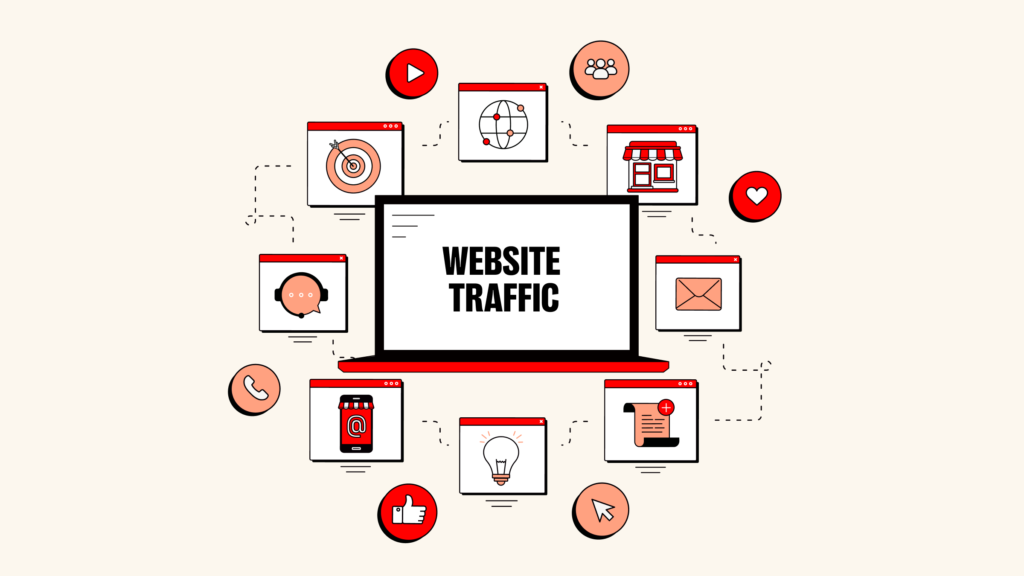
With all these problems some websites will still get more people visiting them in 2026. It is not just because they are lucky. The websites that do well think about the people who use them first then they think about how to get found on search engines. Finally they think about how to use machines to help them. Successful websites, like these always put the people who use them first then they think about search engines. Then they think about automation.
They create valuable content, optimise user experience, update regularly, and build trust over time. They understand that traffic growth is a system, not a shortcut.
Conclusion
What’s left to answer as to why most websites cannot attract traffic in 2026 is starkly obvious: bad strategy, lousy content, too much AI, poor observance of SEO fundamentals. Those are the reasons why websites are failing. The successful ones are those that know that the usage of users and search engines needs to be considered properly.